
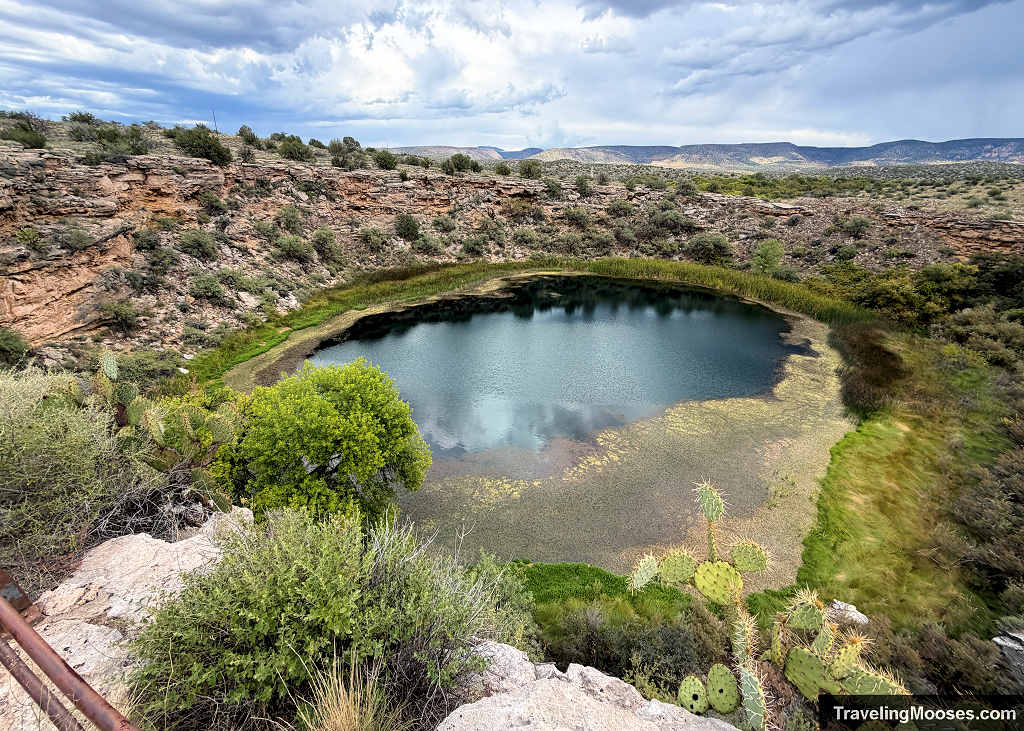
Most road-trippers drive past this spot without a second thought, and they are missing out. Montezuma Well National Monument is completely free, easy to park at, and fascinating once you step past the entrance. In a few minutes of walking a paved path up some stairs, you leave the open desert behind to look down into a massive limestone sinkhole fed by millions of gallons of water daily. You will also get close-up views of ancient cliff dwellings built into the limestone walls and hidden at its base. It is a quick, worthwhile detour, provided you watch your step around the local harvester ants.
Here is what we wish we had known before visiting, along with practical tips to make the most of the stop.
Quick Logistics: Hours, Cost, and Trail Stats
- Location: 5512 Montezuma Well Rd, Rimrock, AZ (about 20 minutes northeast of Montezuma Castle and 30 minutes south of Sedona)
- Cost: Free. There is no entry fee, day-use fee, or Red Rock Pass required.
- Hours: 9:00 AM to 4:45 PM daily.
- Distance: 0.3-mile loop with two optional stair spurs into the sinkhole and canal.
- Trail Surface: Paved with stairs and hard-packed gravel on the upper rim; uneven native rock on the lower steps.
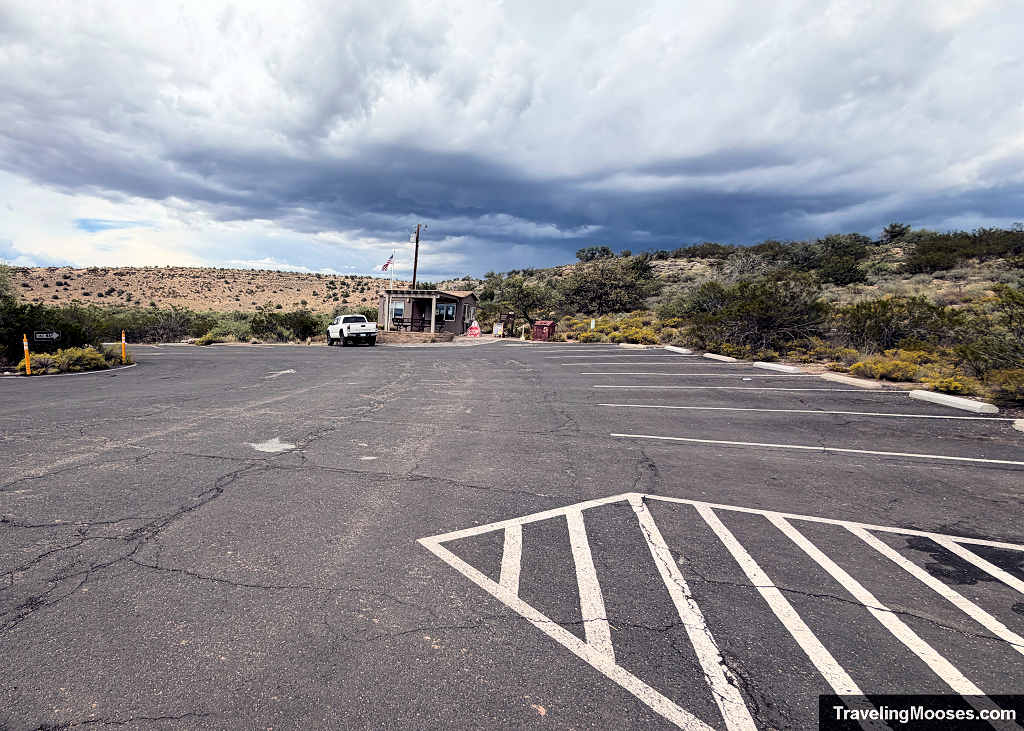
- Facilities: Paved lot, clean flush restrooms, and a ranger station at the trailhead.
Visiting Montezuma Well Instead of Just Montezuma Castle
Like most visitors, we stopped at Montezuma Castle first, paid the entry fee, and walked the paved loop under the five-story cliff dwelling. We had no idea the Well existed until we saw it mentioned in a park brochure and realized it was only 20 minutes away.
The sky looked stormy when we arrived, with dark desert clouds and distant lightning along the horizon. The ranger at the entrance station was not concerned yet and waved us through.
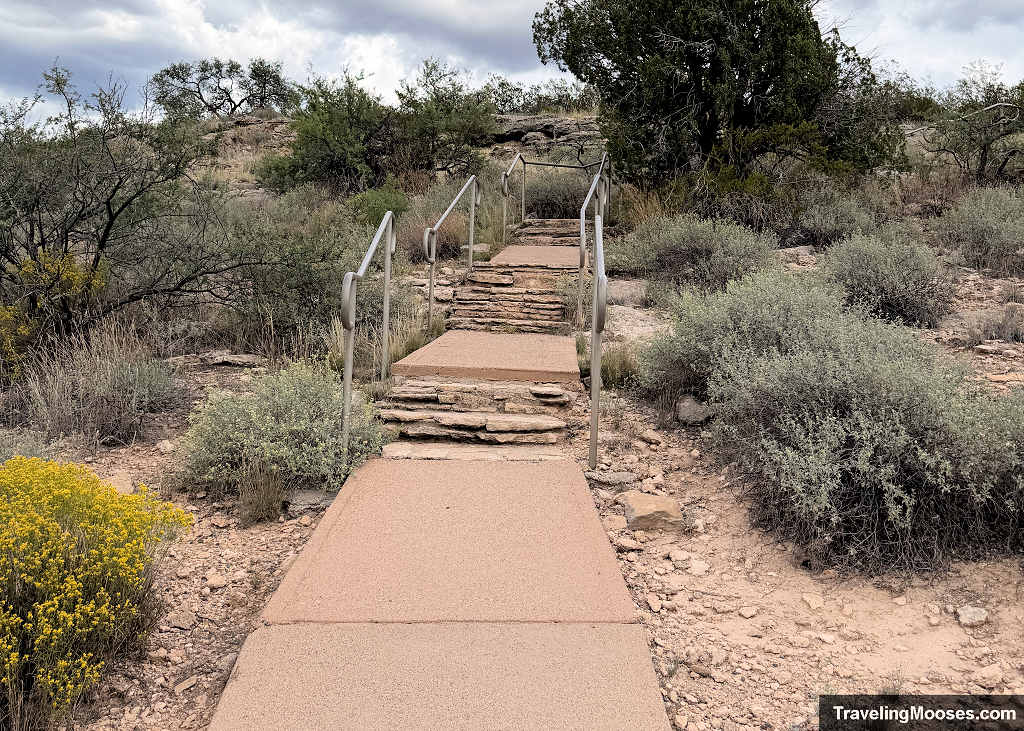
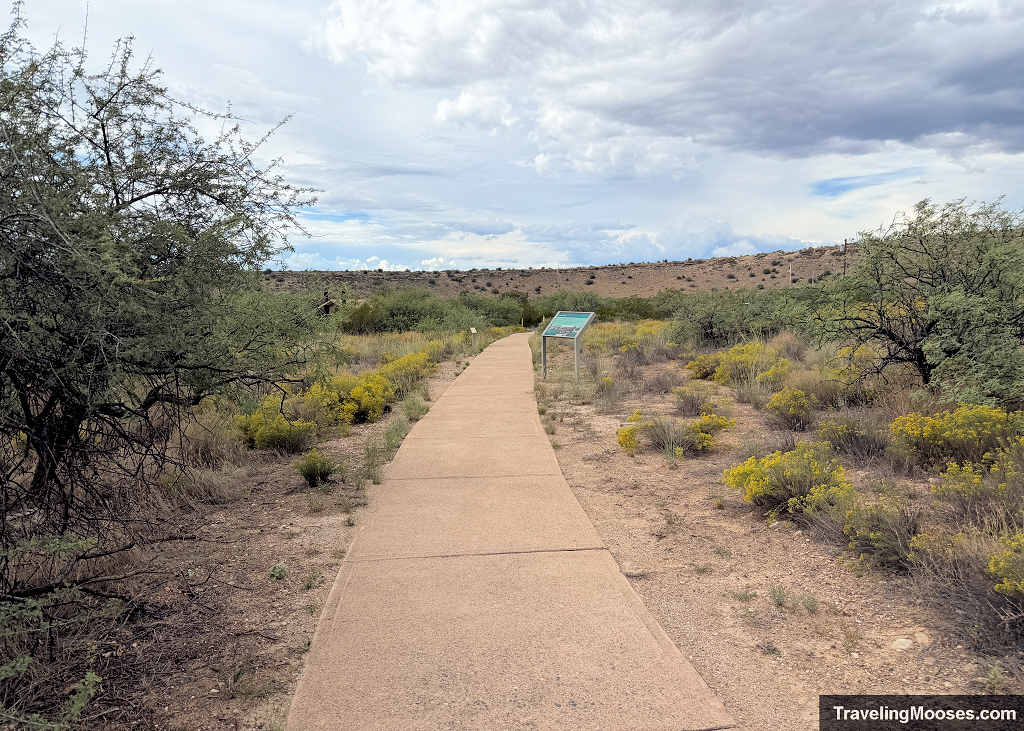
A paved path with stairs and solid handrails leads uphill from the parking lot. On the way up, we stopped to film an active colony of red harvester ants moving across the dirt, which turned out to be an ironic prelude to what happened later on the trail.
At the top of the rise, an overlook opens up with sturdy safety railings and interpretive signs.
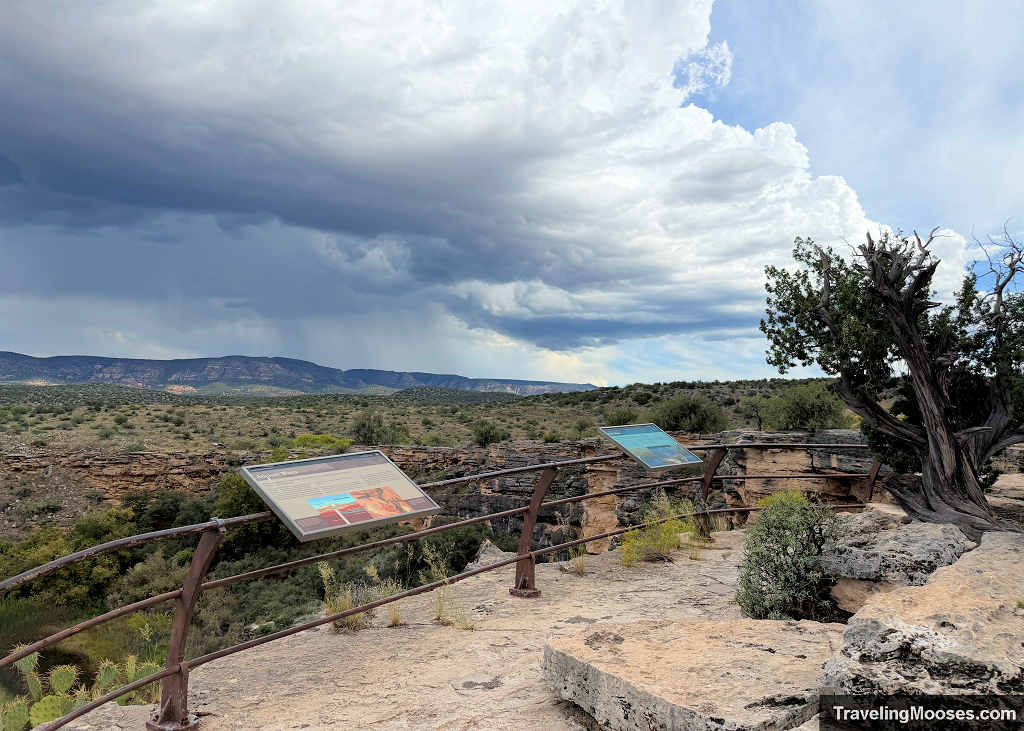
A park ranger was stationed there to keep visitors from scrambling across the loose, exposed rock ledges toward the fragile cliff ruins, which are strictly off-limits.
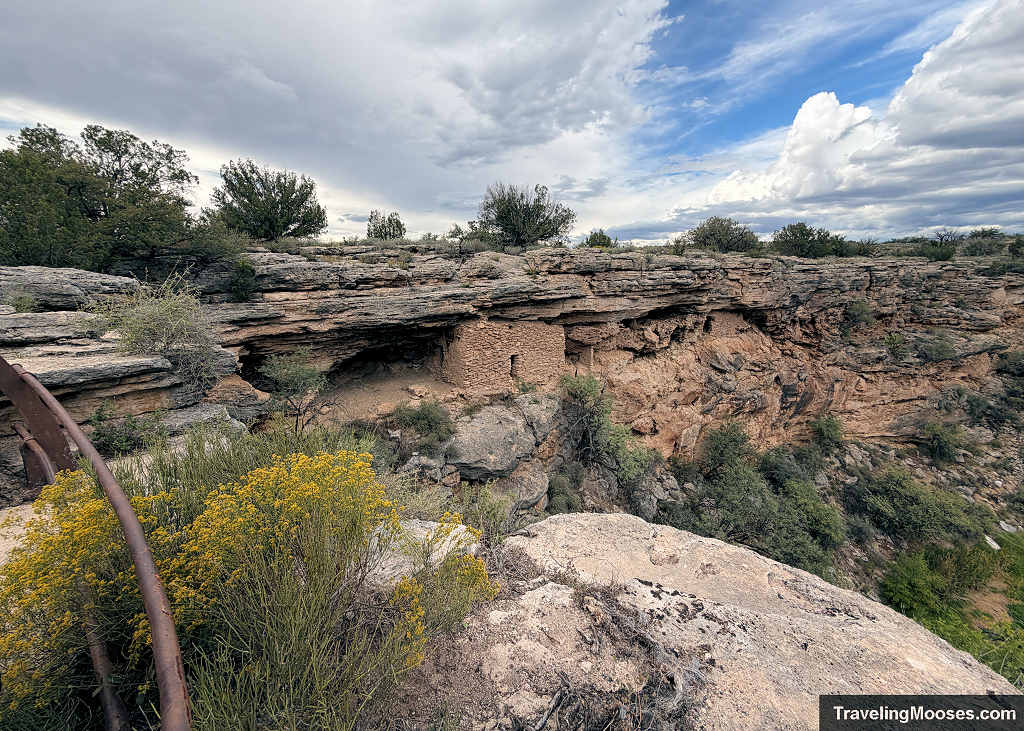
Taking the “Secret” Stairs Down to the Water
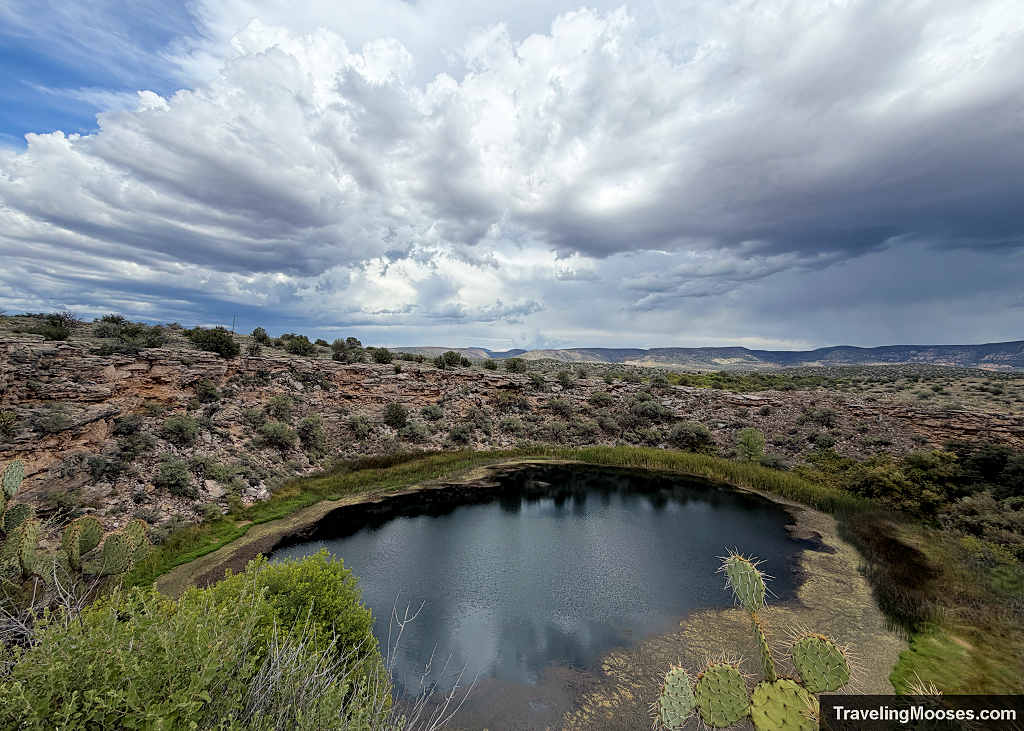
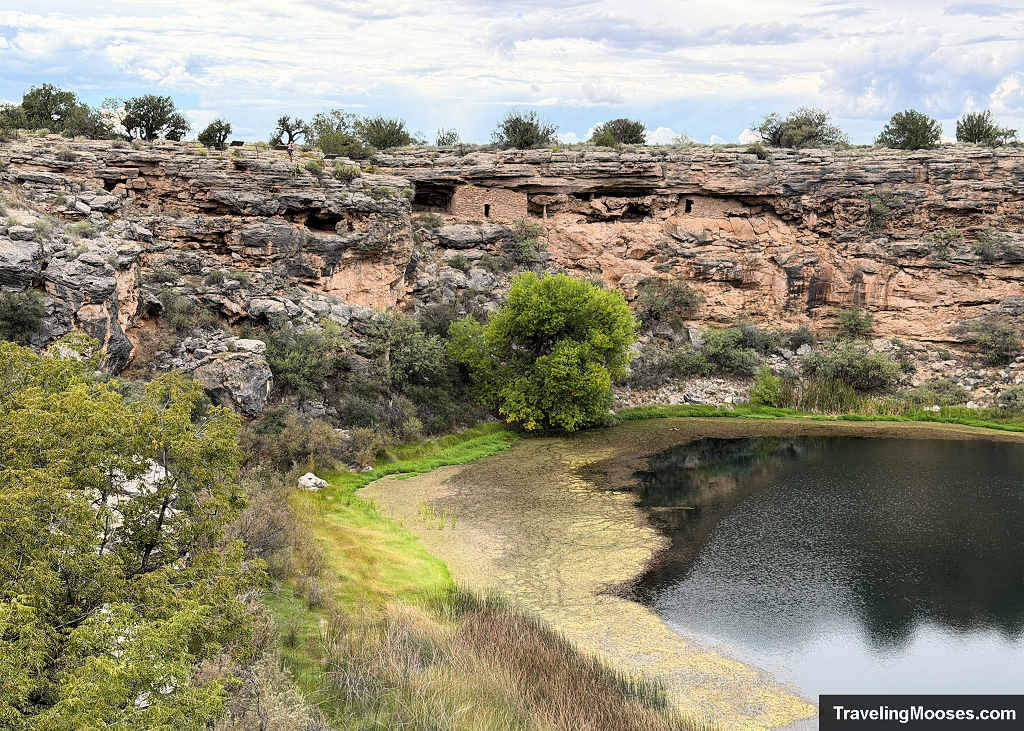
The main view from the rim looks down into a 368-foot-wide collapsed limestone cavern filled with deep green water. Over 1.4 million gallons of artesian spring water pump into this basin every single day.
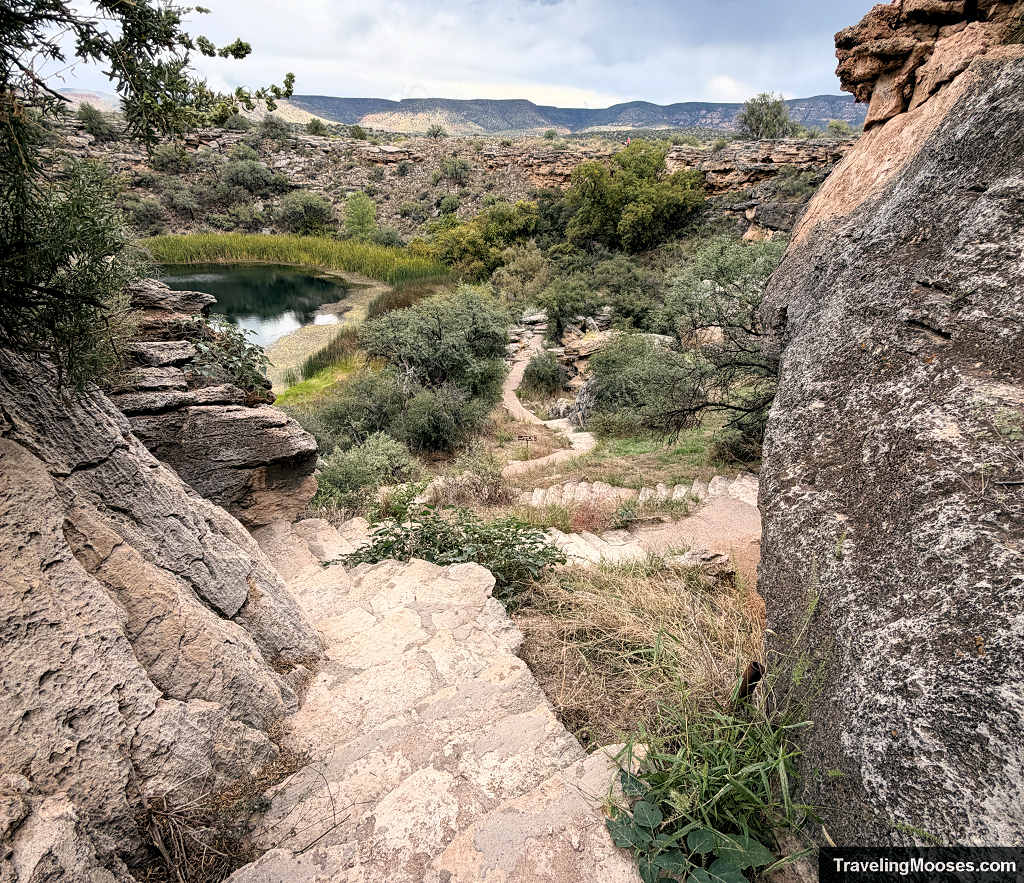
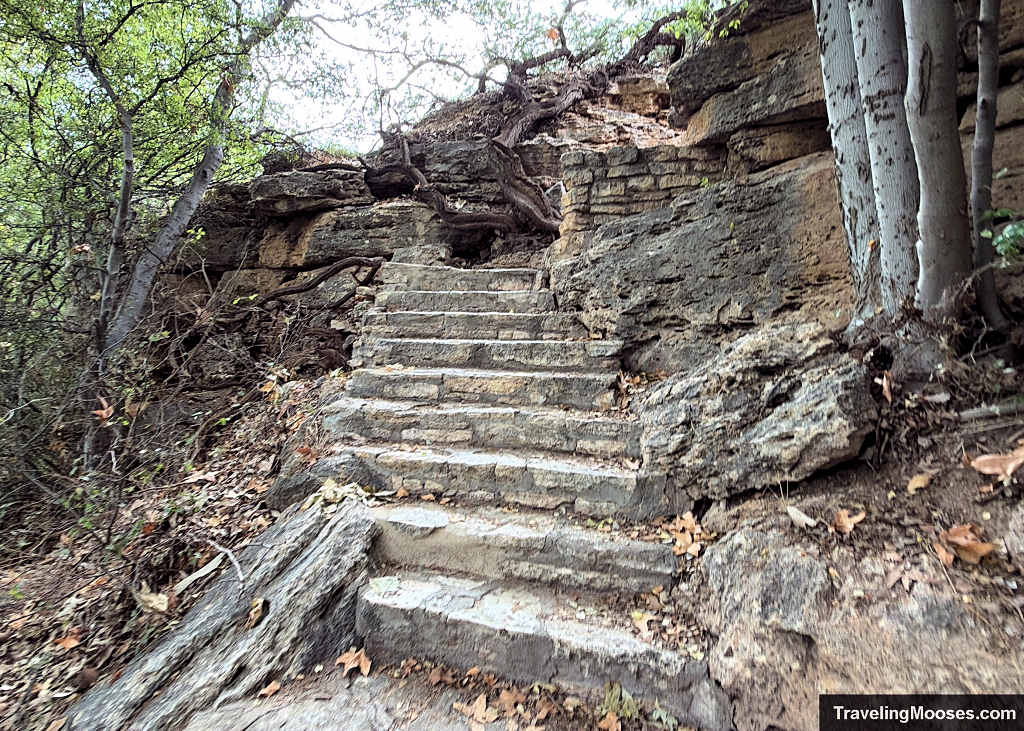
If you look along the rim, you will spot a narrow stone staircase winding down toward the base of the sinkhole. It is easy to walk right past if nobody else is using it.
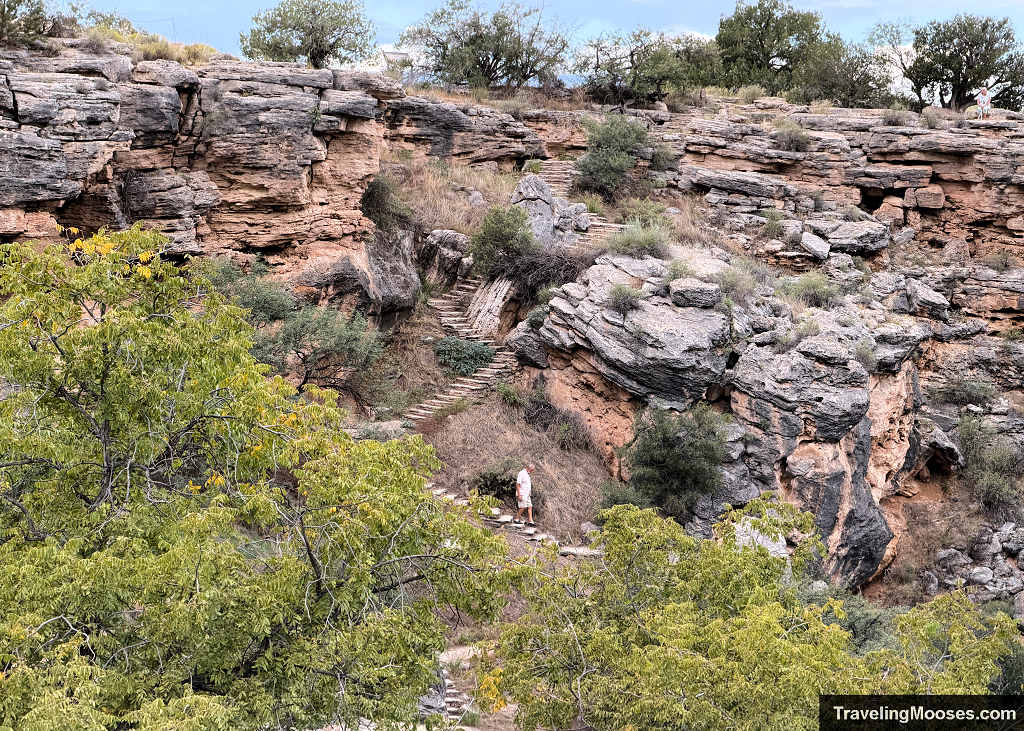
Trail Footing Note: Unlike the upper loop, these stairs have no handrails and feature uneven, narrow rock steps. It is not accessible for everyone, so watch your footing on the way down.
If you can handle the steps, going down into the basin is the best part of the park:
- The bottom of the well is heavily shaded by large Arizona sycamores, making it noticeably cooler than the exposed rim above.
- Looking up from below gives you a clear view of preserved Sinagua stone masonry built directly into the cliff faces.
- Following the water into a grove of trees leads to a stream and another dwelling built inside a limestone cave. It is cordoned off for preservation, but you can see clearly into the interior.
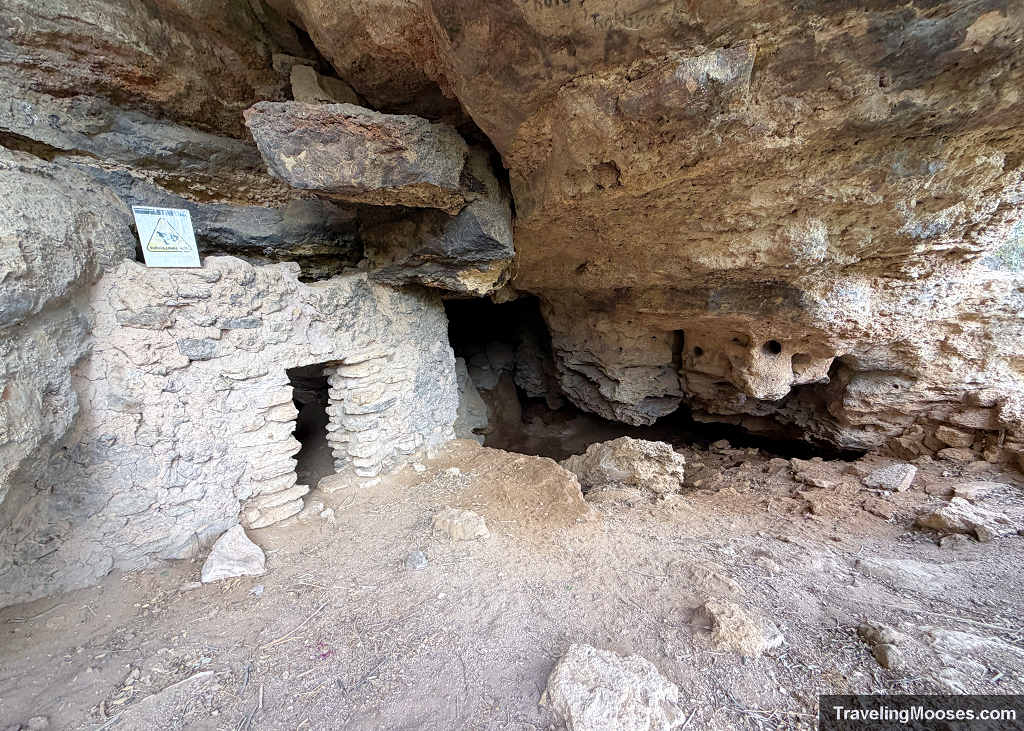
The only slight disappointment is that you cannot access the water directly. There is no path out to the shoreline, though given the high arsenic levels, endemic leeches, and unique water scorpions living in the pool, staying back on the trail is probably for the best. Swimming is strictly prohibited.
The Harvester Ant Incident
Once you finish exploring the base, retrace your steps back up the stone staircase to the upper rim trail. Continuing along the outer path gives you a higher vantage point over the cliff dwellings.
That was where the ant struck.

Out of nowhere, a sharp, burning pain hit my lower ankle. Harvester ant bites produce an intense, throbbing sting that lasts for hours. We spotted the culprit immediately, got it off my ankle, and took care of it on the spot.
However, the paranoia set in right away. For the next thirty minutes, every brush of fabric against my legs felt like another ant crawling up inside my pants.
Trail Tip: There were harvester ants everywhere: on the paved paths, on the stone stairs, and in the dirt beside the trail. Under the cloudy, overcast skies, they looked like plain brown desert ants, but the second the sun broke through, they were bright, fiery red. Keep moving through active patches and brush them off immediately if they start climbing up your footwear.
The Historic Irrigation Ditch Path
Continuing around the loop leads to a second set of stairs heading down toward Beaver Creek.
This descent is also steep without handrails, but it drops you down to the natural rock fissure where the sinkhole drains.
The water flows directly into an 800-year-old stone irrigation canal hand-chiseled by the Sinagua people to water crops on the valley floor.
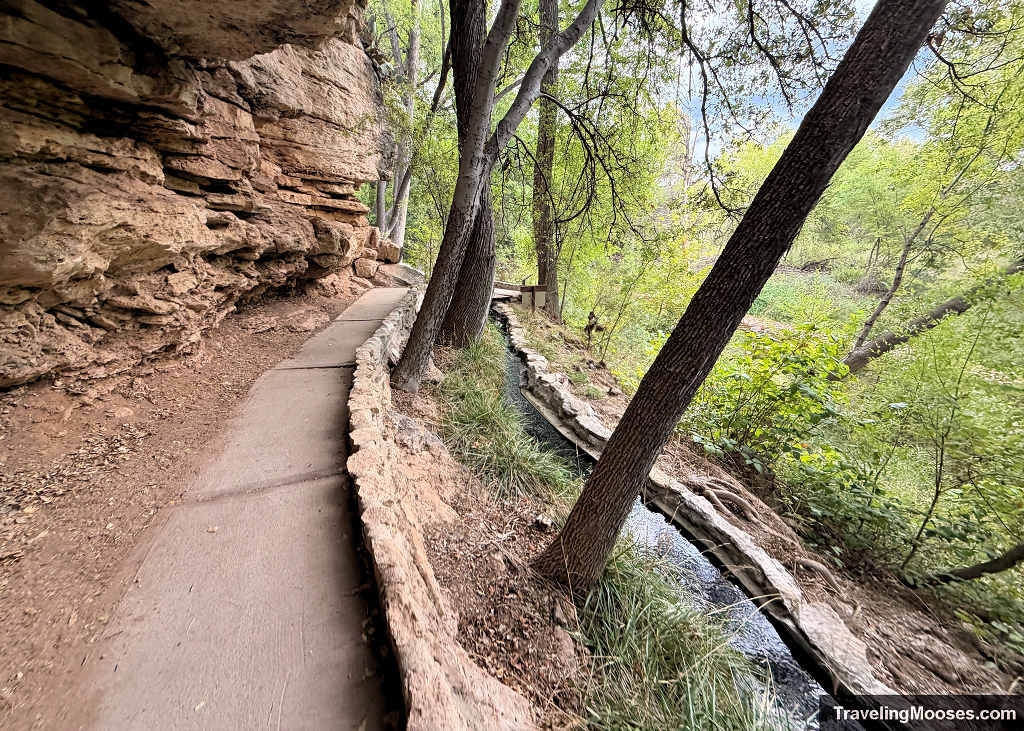
The path running along the ditch is green, quiet, and sheltered from the desert heat. On our way back up, we spotted a harmless garter snake in the grass and a few more ant colonies, but no rattlesnakes.
Returning to the Trailhead
By the time we got back to the parking lot, the storm front had moved directly overhead. The ranger had just closed the trail behind us due to lightning, so our timing worked out well.
Before getting into the car, I headed straight to the trailhead restrooms, went into a stall, and shook out my pants to verify no other ants were hidden inside the seams. Sitting on car upholstery while wondering if a stinging bug is still hitchhiking is not worth the risk. Once the coast was clear, we had a nice chat with the rangers about the local harvester ants before packing up.
What to Skip: The Pithouse Site
As you drive out along the access road, you will see a small pullout for the Pithouse Ruin.
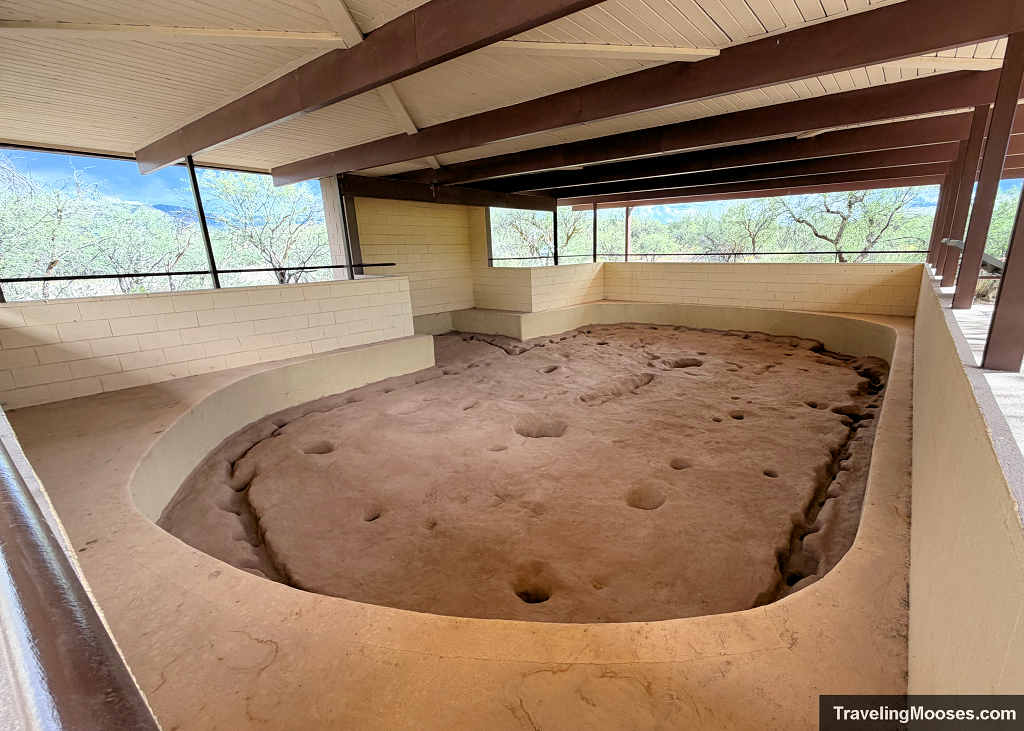
It is an excavated dirt pit with marked post holes underneath a modern metal pole barn. Compared to the sinkhole, the stone cliff rooms, and the running canal trail, it is not particularly memorable. You can safely skip that turnout and continue on your way.
How to fit Montezuma Well into your Schedule
Montezuma Well is an easy stop to add to a central Arizona road trip or as a quick half-day trip from Sedona. It takes 45 to 60 minutes, costs nothing, and offers a closer, more hands-on look at historic ruins and unique geology than most drive-by viewpoints.
If you are already planning to see Montezuma Castle, take the extra 20 minutes to drive up to Rimrock and explore the Well. Just take your time on the lower stone steps, and check your pant cuffs before you drive away.